
BJJ for Adults: What to Expect When You Start After 30
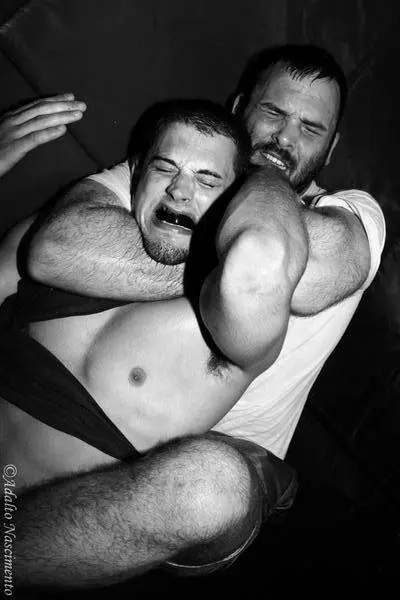
Why adults over 30 often make better BJJ students
Adults who start BJJ after 30 carry something that younger beginners often lack: patience. A 22-year-old starting BJJ can be difficult to coach because they frequently want to muscle through positions rather than understand them. Adults who start in their thirties and forties are usually more willing to slow down, ask questions, and apply corrections deliberately — which is exactly what BJJ rewards.
The art is built on leverage, timing, and mechanical efficiency rather than strength or speed. That makes it unusually well-suited to adults who are not trying to compete but do want to develop a real skill. Most sports become harder to learn as athletic capacity peaks and begins to decline. BJJ tends to reward experience in a way that offsets some of what age takes away.
What the first three months actually look like
The first month of BJJ is primarily about learning to be uncomfortable without panicking. Being on the bottom of a position, having someone controlling your posture, working through scrambles — these are physically unfamiliar experiences for most adults. The goal in month one is not to win rounds. It is to develop enough familiarity with the discomfort that you can start paying attention to the mechanics instead of just surviving.
By the end of three months, most adult beginners at a well-coached gym start to see positions they recognize, feel the difference between their own good and bad posture, and ask better questions after rounds. The art has not gotten easy — it has gotten more legible. That shift is meaningful and worth staying for.
Recovery and managing your body as an adult practitioner
Adults over 30 recover differently than 20-year-olds, and treating that as a problem to overcome rather than a fact to manage usually produces injuries. Two solid sessions per week is plenty for meaningful skill development. If you are also doing other physical training, honest recovery management becomes more important, not less.
Sleep, hydration, and the willingness to tap early rather than test your joints are the non-negotiable basics. The practitioners who train into their 40s and 50s are almost universally the ones who learned to train intelligently early. Ego-driven rolling that protects a tap at the cost of a shoulder or knee does not serve a 35-year-old the same way it might not have hurt a 22-year-old. The art is worth protecting your body for the long term.
Self-defense and the practical case for BJJ as an adult
BJJ was developed and tested specifically for scenarios where a smaller or less athletic person needs to survive and control a physical encounter. That foundation makes it one of the most practical self-defense systems for adults who are not planning to compete. Learning how to maintain a position, escape from underneath a larger person, and manage a situation that has gone to the ground are skills with direct real-world relevance.
The confidence that comes from that training is different from what you get in most fitness classes. It is not performed confidence — it is the earned kind that comes from knowing you have spent hundreds of rounds solving hard physical problems. Adults who train BJJ consistently for a year typically describe a shift in how they carry themselves that extends well beyond the gym.
Finding the right gym as an adult beginner
The most important variable for an adult starting BJJ is whether the gym culture supports learning rather than just rolling. A room where experienced students run over beginners, where the goal of every round is to dominate rather than develop, and where the coaching is vague rather than specific is not a good environment for an adult who wants to actually build their grappling.
Look for a gym where the coach can explain the mechanics of positions clearly and where the room culture allows newer students to ask questions and learn from rounds rather than just endure them. In the East Bay, Team Black MMA in Pittsburg offers BJJ under Coach Dan Black, who holds black belts under two instructors — Denny Prokopos and Bryant Pangelinan, a student of world champion Carlos Sapao. For adult beginners who want to develop real grappling in a room with genuine credentials, it is worth the trip.
Ready to Train for Real?
Reading helps, but progress happens in the gym. Book your first class or reach out if you want help choosing the right starting point.
Continue Reading
A beginner-friendly guide to walking into your first Muay Thai class at Team Black MMA in Pittsburg, CA.
How MMA training supports fat loss, confidence, and consistency when the coaching and environment are right.
A practical comparison of Brazilian Jiu-Jitsu and wrestling for control, takedowns, and real-world self-defense.