
What Is Muay Thai? A Beginner's Guide to the Art of Eight Weapons
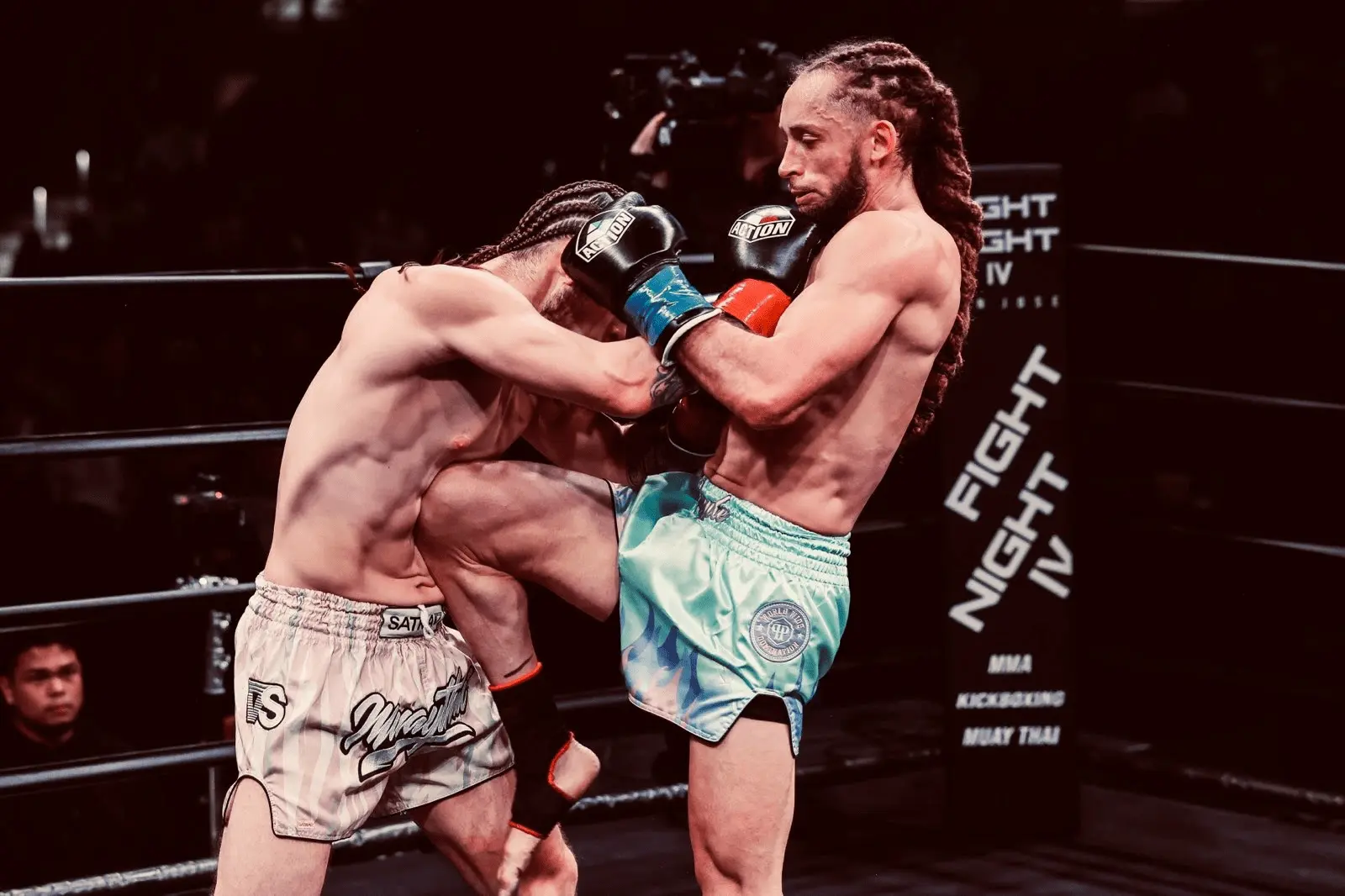
The art of eight weapons
Muay Thai is a striking art from Thailand that uses fists, elbows, knees, and kicks — eight striking surfaces in total, which is why it is often called the art of eight weapons. That range makes it distinct from boxing, which uses only fists, and from most kickboxing systems, which typically restrict elbows and the full use of knees and the clinch.
The additional weapons are not just extra options. They change how the entire game is played. Elbows require different range management than punches. Knee work from the clinch is a separate tactical game from open-stance striking. The teep (push kick) is a distance tool that boxing simply does not have. Learning Muay Thai means learning to use all of those tools as a connected system, not as additions to a boxing base.
How Muay Thai differs from kickboxing
Most Western kickboxing styles developed from boxing and added kicks, particularly low kicks and roundhouses, while keeping the basic footwork and hand positioning of boxing. Muay Thai developed from a different foundation — one that includes the clinch, sweeps, and the deliberate use of elbows and knees as primary weapons alongside striking from range.
In practice, the difference shows up in how you learn to stand, move, and generate power. The Muay Thai stance is slightly different from a boxing stance to accommodate kicks and the clinch. The mechanics of the Thai roundhouse are different from a sport karate or kickboxing roundhouse — the whole body rotates through the hip, using the shin rather than the foot as the striking surface. Those details matter from the beginning, which is why starting Muay Thai with a coach who understands the distinction produces better mechanics than learning kickboxing and trying to add Thai elements later.
What Muay Thai training looks like week to week
A typical Muay Thai session at a serious gym starts with a warm-up that includes skipping, shadowboxing, and dynamic stretching to prepare the joints for striking. The technical portion introduces or refines specific techniques — a combination, a counter, a defensive movement — and explains the mechanical logic behind it. Pad work follows, where a coach or partner holds for you and gives live feedback on timing, power, and positioning. Some sessions end with clinch drilling or controlled sparring depending on the student's level.
The pace for beginners is intentionally methodical. The mechanics that determine how effective your striking becomes — hip rotation, guard position, footwork timing — are built in the first few months. Students who develop those mechanics correctly progress quickly. Students who skip the foundations tend to plateau and develop habits that take much longer to correct.
Why people start Muay Thai — and why they stay
Most adults start Muay Thai for one of three reasons: fitness, self-defense, or curiosity about a martial art they have heard is worth learning. All three are legitimate starting points, and Muay Thai delivers on all of them. The conditioning demands are high, the self-defense applications are real and practical, and the art is deep enough that students who start curious often find themselves still training ten years later.
The reason people stay is usually the same: Muay Thai is engaging in a way that most fitness pursuits are not. Every session is a problem-solving exercise. Your body is working hard while your mind is actively processing — timing, distance, mechanics, reaction. That combination of physical and mental challenge is what keeps practitioners from getting bored, which is ultimately the most reliable predictor of fitness results over time.
How to start Muay Thai in the East Bay
If you are looking for Muay Thai training in the East Bay, the most important decision is choosing a gym where the instruction is grounded in real technique rather than a fitness-adapted version of the art. The difference shows up quickly in pad work quality, the specificity of corrections, and whether the coach can explain the mechanics of each weapon as a connected system.
Team Black MMA in Pittsburg offers Muay Thai instruction built on authentic credentials — Coach Dan Black has trained at Lions MMA Club in Phuket and competed professionally in Thailand. The gym has produced two Glory Kickboxing world-ranked fighters from the same coaching system available to beginners today. If you are in the East Bay and want to start Muay Thai with real foundations, that is a concrete reason to book a first class.
Ready to Train for Real?
Reading helps, but progress happens in the gym. Book your first class or reach out if you want help choosing the right starting point.
Continue Reading
A beginner-friendly guide to walking into your first Muay Thai class at Team Black MMA in Pittsburg, CA.
How MMA training supports fat loss, confidence, and consistency when the coaching and environment are right.
A practical comparison of Brazilian Jiu-Jitsu and wrestling for control, takedowns, and real-world self-defense.